
Over time, decay, cracks, and fractures can weaken or discolor a tooth. A tooth crown is the most effective solution whenever a tooth is badly damaged, cracked, broken, or misshapen. We provide custom dental crown treatment at Stonehenge Family and Cosmetic Dentistry in Raleigh, NC.
Crowns, also known as dental caps, are effective restorative dentistry treatments that strengthen and add structure to damaged teeth. Using the latest technology, Dr. Cynthia Elderkin and Dr. Claudel Giggey can give you customized and natural-looking teeth.
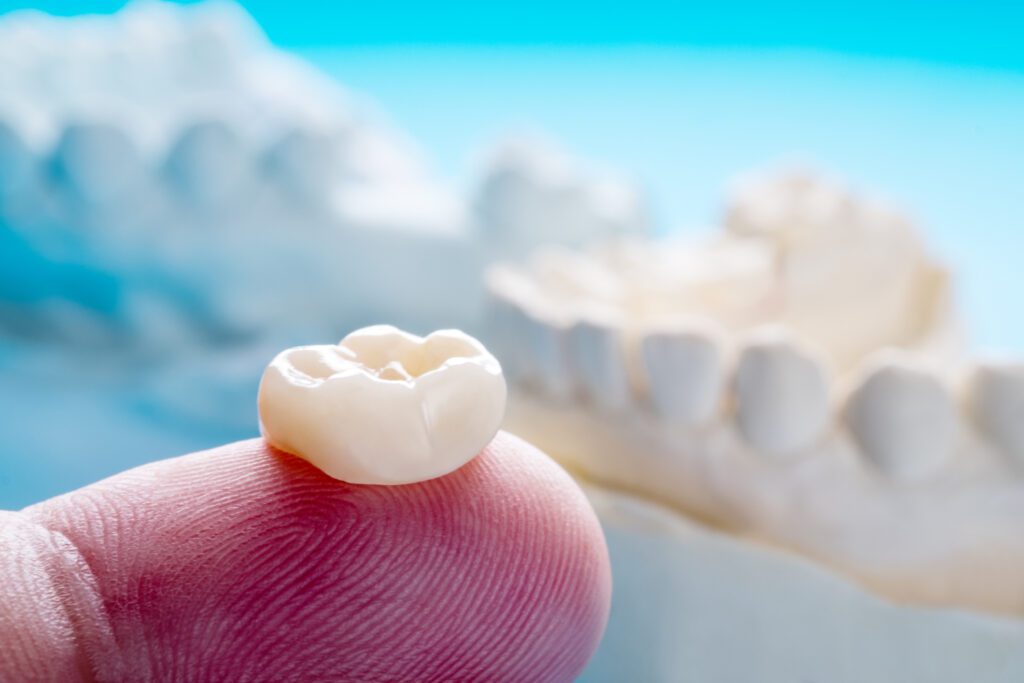
What Can Dental Crowns Treat?
Dental crowns are one of the most versatile tools a dentist has. They can treat almost any restorative dental problem, as well as many cosmetic ones.
Cosmetic Dental Fixes
When you have discolored teeth, professional teeth whitening is usually the solution. However, not all discoloration responds to traditional methods. Teeth discolored by medication or trauma may require a different solution. A dental crown can match the shade of white that you desire or blend in with the rest of your smile. It completely covers the discolored tooth, hiding it from view.
Cover Misshapen Teeth
Misshapen or deformed teeth are often a cosmetic concern for patients. They can have a functional impact, too. Each tooth has a specific job. Our tongue interacts with our teeth to produce speech sounds, and each tooth plays a different role in breaking down food. A dental crown restores the shape of the tooth so it can function properly and look good in your smile.
Stabilize a Tooth after a Root Canal
One of the most common uses for a dental crown is to stabilize a tooth after a root canal. During a root canal, the dentist removes infected pulp from the interior of the tooth, refilling it with a biocompatible material and sealing it off. This doesn’t always restore full functionality to the tooth. A dental crown ensures you get back full function and protects the tooth from further infection.
Support a Dental Bridge
A traditional dental bridge uses the teeth on either side of the restoration’s span to support it. These anchor teeth are under a lot of pressure. They wear down faster and are more prone to tooth decay and other dental problems. Using dental crowns on these teeth can protect the tooth structure. Instead of the tooth taking on the pressure of supporting the bridge, the dental crown takes the brunt of it.
Treat Severely Decayed or Damaged Teeth
When teeth decay severely, large chunks of them can go missing. It eats away at your tooth structure. A dental crown can replace the portions that have eroded, as well as protect the tooth from further infection. It also eliminates sensitivity when you’re eating and drinking.
Treat a Broken Tooth
A large portion of your tooth breaking off can lead to multiple issues. It can expose the dental nerves in your teeth, causing pain whenever you try to eat or drink. There can also be sharp edges where the tooth broke off, putting the soft tissues in your mouth at risk. A crown protects the dental nerves, preventing them from coming into contact with food and drinks. It restores a natural tooth shape, with no sharp edges to cut your tongue or the insides of your cheeks.
Types of Dental Crown Materials
Many types of crowns are available at the dentist, including:
- Metal: Traditionally, crowns were made of metal. Metal alloy crowns provide strength to a treated tooth but don’t blend in with the shade of other natural teeth. These crowns can use gold, silver, tin, and other metals.
- Porcelain Fused to Metal (PFM): PFM crowns consist of a thin layer of porcelain that covers metal. While these crowns are strong, the metal beneath the porcelain can show through at the gum line.
- Porcelain: These crowns help mimic the natural appearance of teeth with tooth-colored materials. Porcelain is also highly durable and useful if you need to cover molars with crowns. Traditional crowns use porcelain.
- Ceramic: CEREC same-day crowns use ceramic materials, which are tooth-colored like porcelain crowns. The difference is that ceramic crowns aren’t as strong, so dentists prefer them for the front teeth.
- Zirconia: Zirconia crowns use a hard ceramic material. However, this hard material can potentially damage teeth. Zirconia crowns are also more expensive than other options.
Our office prefers porcelain crowns because they look natural and strengthen teeth. We work with local dental labs to craft customized crowns that match the aesthetic of your smile.
Patient Review
Dental Crown Treatment in Raleigh, NC
Before you get a crown, we take digital X-rays to get a clear, detailed picture of your tooth and the surrounding bone. This technology allows us to see cavities, hairline fractures, bone loss, and signs of infection.
Pretreatments
If we find any underlying oral health problems, we treat them first. Our office can treat gum disease and perform root canal treatment so your crown will have a strong, healthy base.
In some cases, you may need other treatments to prepare your tooth for a crown. We will always explain your options and create a treatment plan that fits your needs. Our goal is to make sure your mouth is healthy before we begin.
Tooth Preparation
Fitting a dental crown requires at least two visits to our office. First, we will remove decay, fractures, or underlying tooth problems. Next, we will shape the tooth and take a digital impression. This precise impression is sent to our dental lab, where your custom crown is fabricated.
Our office uses tooth-colored crowns, so dental technicians will use our specifications to color-match your restoration. We will fit you with a temporary crown to protect the tooth while you wait.
Final Crown
On the next visit, we will remove your temporary crown. Then, we fit and adjust the final crown to ensure proper function, comfort, and appearance. We check your bite and make sure the crown blends in with your natural teeth.
If you receive a single dental implant and require a crown, we will wait until your implant has fully healed before adding the crown. This ensures the implant is stable and ready to support your new tooth.
How To Care For Crowns
After your crown treatment, we recommend eating soft foods like pasta, mashed potatoes, and yogurt. Eating hard or crunchy foods immediately after receiving a crown can dislodge or damage it. These foods can also increase tooth pain and sensitivity.
You can clean your crowns like natural teeth. Floss between your crowns and natural teeth to remove food debris and prevent bacterial buildup. Then, brush with a soft-bristled brush and non-abrasive toothpaste.
Remember to continue scheduling routine visits so we can examine and clean your crowns. A good oral hygiene routine and regular dental care ensure your tooth crowns last.
Dental Crown FAQs
By now, you know crowns can help repair a tooth, add structure to weakened teeth, and change tooth color. But do you want to know more about dental crowns? Read answers to popular questions about crowns in Raleigh, NC.
What are inlays and onlays?
Also known as partial crowns, inlays and onlays cover and protect a different part of the tooth than crowns. Inlays cover the tooth’s chewing surface between the tooth cusps. Onlays cover the chewing surfaces and cusps, meaning they cover the very top of the tooth.
Inlays and onlays are typically made of porcelain or composite materials to blend in with teeth. In addition, like crowns, inlays and onlays are separate pieces that a dentist can adhere to the tooth.
Do dental crowns hurt?
Dental crown treatment isn’t painful. Our dental office uses local anesthesia to numb the treated area. We also offer sedation dentistry for patients anxious about the treatment.
Our goal is to ensure patients feel comfortable during treatment. It’ll take time to get used to your new crown, but you shouldn’t feel excessive pain or discomfort.
Do I need crowns for a dental bridge?
Not always. Our office offers implant-supported dental bridges so you don’t need to alter your healthy teeth. Instead, dental implants support the bridge, preserving your natural tooth structure. Dr. Elderkin and Dr. Giggey will evaluate your smile and recommend the best option for your specific needs and goals.
How long do dental crowns last?
If you take care of your crowns, they can last 15 to 20 or more years. Gently brushing the crowns and flossing between the crowns and natural teeth help ensure your restorations last.
Can dental crowns be damaged?
Although rare, dental crowns can become loose or damaged. An injury can damage your crown. Harmful bacteria can also enter beneath loose crowns and affect natural teeth if you don’t properly care for your oral health. Contact our office if you notice a change in your crown, and we can plan a replacement.
Protect your Tooth Today
Do you have a stained, worn, or injured tooth? Get a custom-made dental crown in Raleigh, NC. Call Stonehenge Family and Cosmetic Dentistry at 919-295-0936. You can also schedule a dental appointment with Dr. Elderkin or Dr. Giggey on our website.
Please let us know at your next dental visit if you have any questions or current dental concerns. We’re here to help. We serve patients from Brennan Station, Traemoor Village, and Heritage Point.